This link will open in a new tab and lead to an external website. We are not responsible for its content or availability.
 Back
Back
Family benefits and services across EU countries differ significantly in terms of entitlements, eligibility, and delivery systems. While all Member States offer some form of family support, the types of support (e.g., cash payments, tax benefits) and access conditions vary. To avoid misunderstandings, especially for cross-border families or those moving between EU countries, it is crucial to consult official resources like the EU portal Your Europe – Family Benefits. This platform provides country-specific rules, including eligibility conditions and cross-border coordination for family benefits.
Fig. 4 – Your Europe online portal - https://europa.eu/youreurope/sdg/#/en/events/
Access to counselling and family planning services supports family well-being and reproductive autonomy. In the EU, these services are usually provided by public healthcare systems, specialised services, and NGOs, with access rules depending on national law (age, residency, and confidentiality).

Fig. 5 – Couple counselling – Source: https://www.masterscounselling.com/s/stories/9-common-misconceptions-of-couples-counselling
For more information on family planning and reproductive health, the World Health Organisation (WHO) provides useful resources:
In many EU countries, integrated family centres run by municipalities or regions combine healthcare, social services, and counselling in one accessible place for families, future parents, and young adults.
Examples:
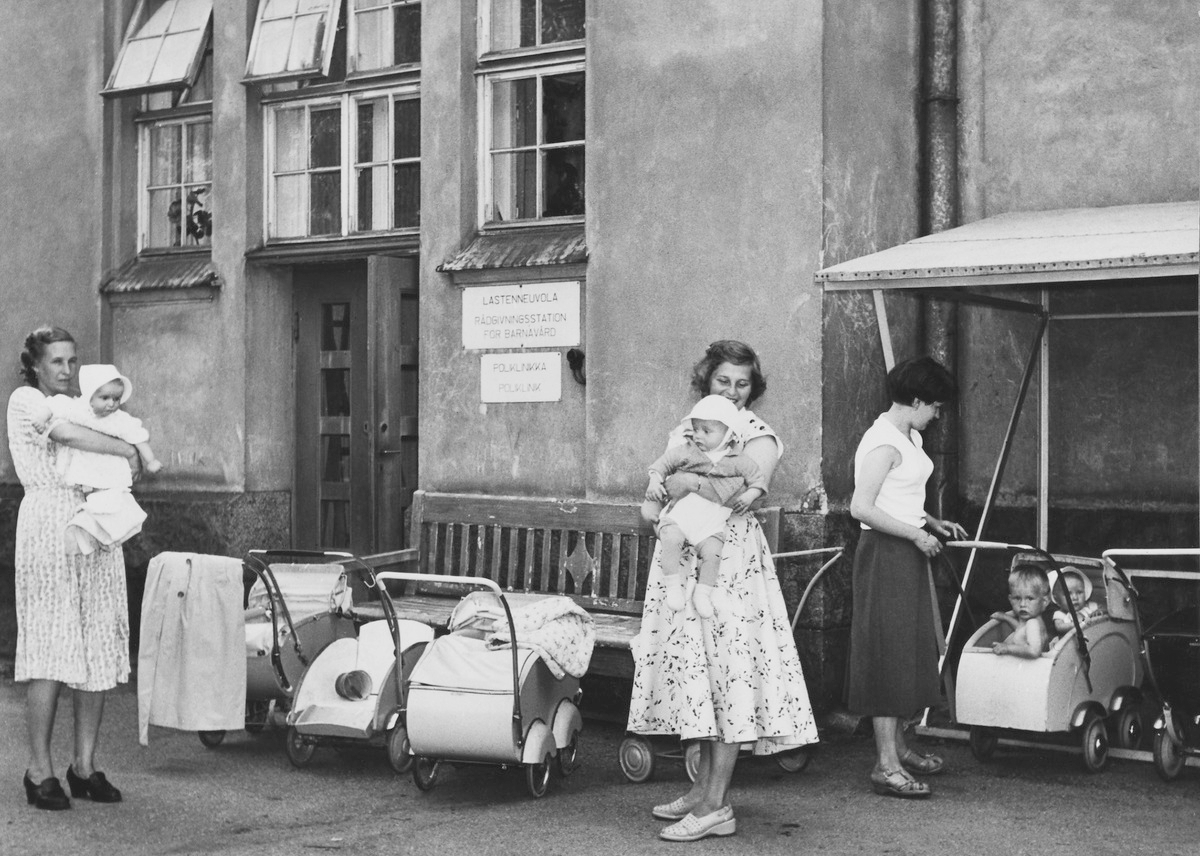
Fig. 6 - In 1954, mothers arrive with their babies for appointments at a maternal and child health clinic in Helsinki - Source: https://finland.fi/life-society/for-more-than-100-years-finnish-neuvola-clinics-have-given-families-a-healthy-start/
NGOs and community organisations work with public authorities to reach more people, fill service gaps, and support specific groups. European networks like Eurochild and COFACE Families Europe help connect civil society and authorities and contribute to policy and service quality. Overall, community-based support helps people access the right help locally and when it matters most, bridging formal rights and real-life support.